Cost of MRI Scan in California Without Insurance: Your Guide
cost of MRI scan in California without insurance

Cost of MRI Scan in California Without Insurance: Your Guide

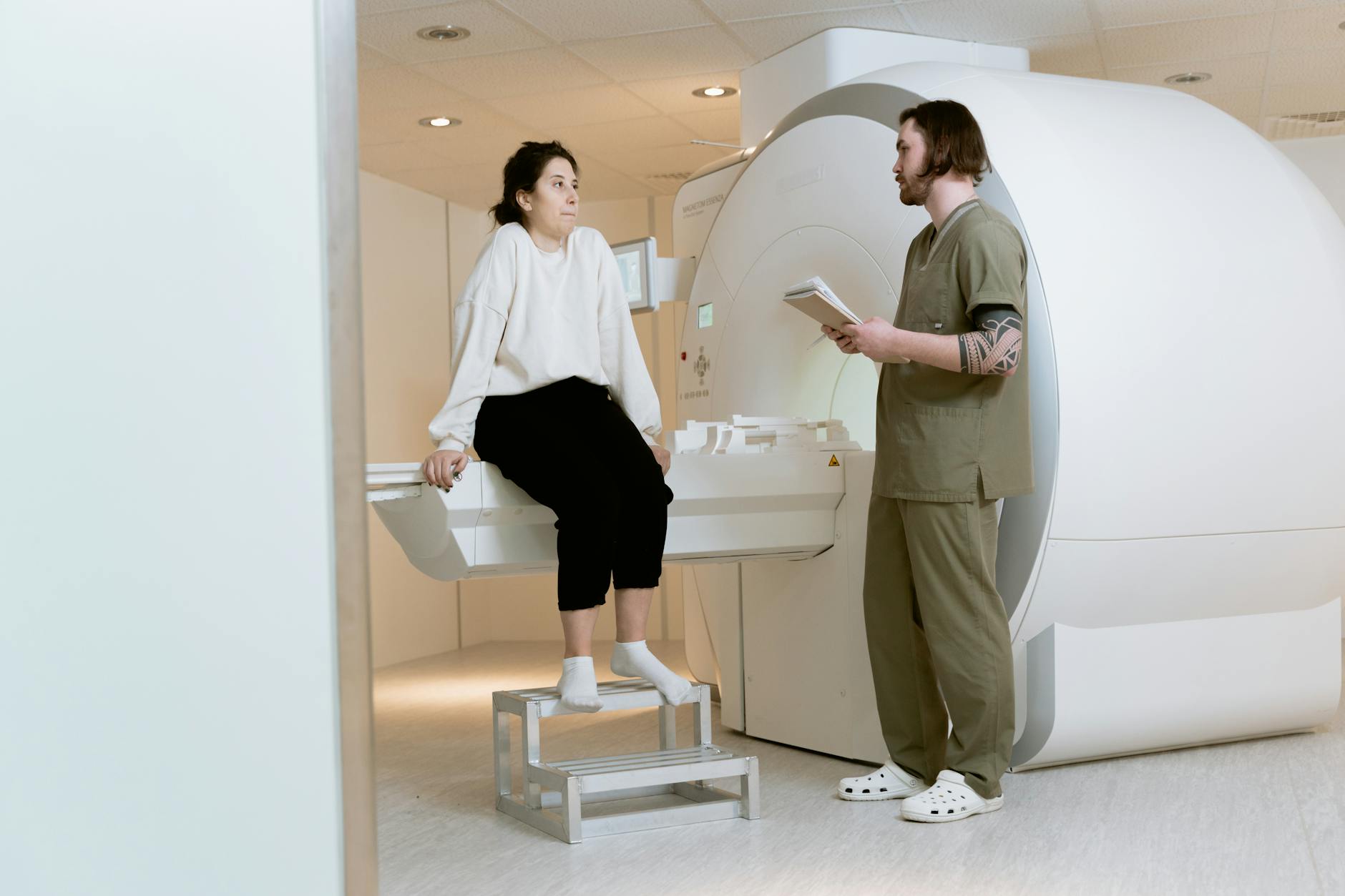
A patient consults with a technician in a modern MRI room, highlighting advanced healthcare facilities.Photo: MART PRODUCTION / Pexels

Cost of MRI Scan in California Without Insurance: Your Guide

Unlock strategies to find affordable MRI scans in California, even without health insurance coverage.

Find Your MRI Solution

Key Takeaways

  • ✓ MRI costs in CA without insurance can range from $300 to over $6,000, varying widely by facility and body part.
  • ✓ Cash-pay discounts are often available and can significantly reduce the price compared to billed rates.
  • ✓ Shopping around and comparing prices from multiple imaging centers is crucial for uninsured patients.
  • ✓ Non-profit organizations and patient assistance programs may offer financial aid for diagnostic imaging.

How It Works

1
Understand Your Needs

Consult with your doctor to determine the specific type of MRI needed and why. This clarity helps in getting accurate quotes.

2
Research and Compare Providers

Contact multiple freestanding imaging centers, hospitals, and university clinics. Ask for their cash-pay rates for your specific MRI.

3
Negotiate for Better Pricing

Don't be afraid to ask for discounts or payment plans, especially if you can pay upfront. Many facilities are willing to work with uninsured patients.

4
Consider Financial Aid Options

Explore patient assistance programs, charity care, or community health clinics. These resources can sometimes provide heavily discounted or free services.

Understanding the Variable Cost of MRI Scans in California Without Insurance
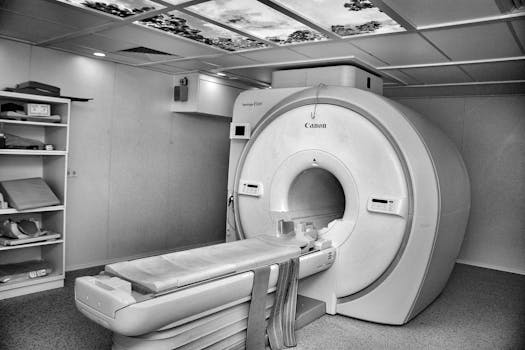
Black and white image of a modern MRI machine in a hospital room with overhead ceiling art.Photo: sirmudi_photography / Pexels
Navigating the healthcare system without insurance can be daunting, especially when faced with the need for advanced diagnostic imaging like an MRI. The **cost of MRI scan in California without insurance** is not a fixed price; it's a spectrum that varies dramatically based on numerous factors. For an uninsured patient in California, an MRI can range from a few hundred dollars to several thousand, a disparity that underscores the importance of being an informed consumer. This section will break down the primary elements influencing these costs, providing a clearer picture of what you might expect to pay. First, the specific body part being scanned plays a significant role. An MRI of the brain or spine, for instance, often costs more than an MRI of an extremity like a knee or shoulder due to the complexity of the imaging and the time required. The use of contrast dye, a substance injected into the bloodstream to enhance image clarity, also adds to the total cost. While contrast can be vital for certain diagnoses, it's an additional expense that patients should inquire about. Secondly, the type of facility where the MRI is performed is a major cost differentiator. Hospital-based imaging centers, particularly those associated with large university medical systems, typically have the highest prices. This is often due to higher overheads, the availability of specialized equipment, and the inclusion of facility fees. Freestanding, outpatient imaging centers, on the other hand, generally offer significantly lower prices for the same procedure. These centers often specialize in diagnostic imaging, operate with lower administrative costs, and are more competitive with their cash-pay rates. Choosing an outpatient center can be one of the most effective ways to reduce the **cost of MRI scan in California without insurance**. Geographic location within California also impacts pricing. Major metropolitan areas like Los Angeles, San Francisco, or San Diego may have higher average costs compared to more rural or less densely populated regions. However, these larger areas also tend to have more competition among providers, which can sometimes lead to more negotiable prices if you shop around diligently. The age and technology of the MRI machine can also subtly influence pricing; newer, higher-field strength machines (e.g., 3T MRI) might command a higher price than older or lower-field machines (e.g., 1.5T MRI), although the diagnostic benefits often justify the difference. Finally, the radiologist's fee for interpreting the images is a separate component of the total cost. While often bundled into the overall price quoted by a facility, it's worth clarifying whether the quote includes both the technical fee (for the machine and technician) and the professional fee (for the radiologist's interpretation). Understanding these cost components will empower you to ask the right questions and pursue more transparent pricing. Being prepared with these details can make a substantial difference in managing the financial burden of an MRI without insurance. For more information on understanding healthcare costs, consider exploring resources on navigating medical billing.

Strategies for Finding Affordable MRI Scans as an Uninsured Patient in CA

Doctor in gloves holding pill bottle and cash, highlighting medical expenses.Photo: Towfiqu barbhuiya / Pexels
For individuals without health insurance in California, securing an MRI can seem like an insurmountable financial hurdle. However, several proactive strategies can significantly reduce the **cost of MRI scan in California without insurance**. The key lies in diligent research, negotiation, and exploring all available resources. One of the most effective strategies is to *shop around*. Do not accept the first quote you receive. Call multiple imaging centers, including freestanding clinics, urgent care centers with imaging capabilities, and even smaller hospitals. When you call, explicitly state that you are an uninsured, cash-paying patient. Many facilities have a separate, lower cash-pay rate that is often substantially less than their billed rate for insured patients. This cash-pay price often reflects a discount for the administrative simplicity of direct payment and the avoidance of insurance claims processing. Next, *negotiate the price*. Healthcare pricing, especially for uninsured patients, is often negotiable. Once you have a few quotes, you can use a lower quote from one facility to negotiate a better price at another. Ask if they offer any additional discounts for upfront payment. Some centers may provide a further reduction if you can pay the full amount at the time of service. Don't hesitate to explain your financial situation; compassion and flexibility are sometimes part of the process, particularly at smaller, community-focused centers. *Consider payment plans*. If an upfront payment is still too much, inquire about interest-free payment plans. Many facilities understand that large medical expenses can be difficult to manage and are willing to set up monthly installments. While this doesn't reduce the total cost, it makes the expense more manageable over time. *Explore patient assistance programs and charity care*. Many hospitals, especially non-profit ones, have programs designed to help low-income and uninsured patients cover medical costs. These programs, often referred to as 'charity care' or 'financial assistance,' can offer significant discounts or even fully cover the cost of an MRI based on your income and household size. It's crucial to apply for these programs *before* your MRI, as eligibility is often determined beforehand. Community health centers or local county health departments can also be valuable resources, sometimes offering diagnostic services at a reduced rate or connecting you with financial aid. Finally, *utilize online price comparison tools*. Several websites and apps are emerging that allow patients to compare the cash prices of medical procedures, including MRIs, in their local area. While these tools may not capture every facility or every discount, they can provide a good starting point for your research and help you identify facilities known for more competitive pricing. These strategies, combined, offer a robust approach to minimizing the **cost of MRI scan in California without insurance**.

Factors Influencing MRI Pricing: Beyond the Scan Itself

A doctor in a face mask discusses diagnosis with a patient in a clinic setting.Photo: Gustavo Fring / Pexels
When evaluating the **cost of MRI scan in California without insurance**, it's important to look beyond just the procedure itself. Several underlying factors contribute to the final price tag, and understanding these can help uninsured patients make more informed decisions and potentially save money. These factors often relate to the operational aspects of healthcare facilities and the specific requirements of the diagnostic imaging. The *level of urgency* can impact cost. While most non-emergency MRIs are scheduled, if a situation is deemed urgent enough to require immediate imaging outside of regular hours, the cost can be higher. Emergency room MRIs, for example, are almost always more expensive due to the overhead of 24/7 staffing, immediate availability, and the general higher pricing structure of emergency departments. Whenever possible, schedule your MRI as an outpatient procedure during regular business hours to avoid these increased costs. Another significant factor is the *brand and model of the MRI machine*. Leading-edge MRI machines, particularly those with higher magnetic field strengths (e.g., 3 Tesla or 3T), offer superior image resolution and faster scan times. These machines are more expensive to purchase, maintain, and operate, and these costs are often reflected in the price charged to patients. While a 3T MRI might be clinically superior for certain conditions, a 1.5T MRI is perfectly adequate for many diagnoses and can be significantly cheaper. Discuss with your doctor if a lower-field strength MRI would suffice for your specific diagnostic needs, as this could be a considerable cost-saving measure without compromising diagnostic accuracy. *Accreditation and reputation* of the imaging center can also play a role. Facilities accredited by organizations like the American College of Radiology (ACR) adhere to strict quality and safety standards. While this accreditation ensures high-quality imaging and patient safety, it can sometimes contribute to slightly higher costs due to the investments required to meet these standards. However, the peace of mind and diagnostic accuracy provided by an accredited facility are often worth the investment. Always verify the accreditation of any imaging center you consider. Finally, the *inclusion of additional services* can inflate the bill. This might include a consultation with a radiologist before the scan, specific post-scan follow-up, or even simply the cost of parking at a large medical complex. Always ask for an itemized estimate that clearly breaks down all potential charges, including the technical fee, professional (radiologist) fee, contrast dye (if used), and any other associated costs. Being proactive in understanding these elements can prevent unexpected charges and help you get the most accurate estimate for the **cost of MRI scan in California without insurance**. For more details on managing medical expenses, you can refer to our guide on understanding medical bills.

Tips for Uninsured Patients: Maximizing Savings and Avoiding Pitfalls

Hands holding a calculator and pen for financial calculations in a well-lit setting.Photo: Kindel Media / Pexels
For uninsured patients facing the **cost of MRI scan in California without insurance**, strategic planning is essential to maximize savings and avoid common pitfalls. Here are actionable tips to guide you through the process: * **Always Get a Written Quote:** Verbal quotes can be misinterpreted. Insist on a written estimate that details all costs, including the technical fee, radiologist's professional fee, and any charges for contrast dye, facility fees, or other incidentals. This prevents surprises later. * **Inquire About Global Fees:** Some facilities offer a 'global fee' or 'all-inclusive price' for uninsured patients, which bundles all related costs into a single, often discounted, payment. This simplifies billing and can be more cost-effective than paying for each component separately. * **Understand Your Doctor's Referral:** Ensure your doctor's referral is specific about the body part to be scanned and whether contrast is needed. An unclear referral could lead to unnecessary imaging or a more expensive procedure than required. * **Avoid Emergency Room MRIs for Non-Emergencies:** As mentioned, ERs are significantly more expensive. If your condition allows, schedule an outpatient MRI. If you receive an MRI in an ER, ensure it's truly medically necessary for an emergency and not simply for convenience. * **Check for Financial Assistance Programs:** Reiterate your search for hospital charity care, patient assistance programs, or state-funded programs. Many non-profit hospitals in California are legally obligated to provide financial assistance to eligible low-income patients. Don't assume you won't qualify. * **Ask About Self-Pay Discounts:** Even if a facility doesn't advertise it, always ask if there's a specific discount for self-pay or cash-paying patients. Many will offer one to avoid the complexities and delays of insurance billing. * **Consider Medical Tourism (Within California):** If you live near a border with another state or a different region within California, sometimes crossing a county line can yield significant price differences. While not always practical, it's worth checking if substantial savings are possible. * **Verify Radiologist Affiliation:** Sometimes the radiologist who reads your MRI is from a separate group and bills independently. Confirm that the price quoted by the imaging center includes the radiologist's fee, or get a separate quote from the radiology group if they bill independently. By following these tips, you can navigate the complexities of obtaining an MRI without insurance in California more effectively, securing the necessary diagnostic imaging without incurring excessive financial strain.

Comparison

FeatureFreestanding Outpatient CenterHospital-Based ImagingUniversity Medical Center
Average Cash Price$300 - $1,500$800 - $3,000$1,500 - $6,000+
Price Negotiation PotentialHighMediumLow
Speed of SchedulingHighMediumMedium
Access to Advanced Technology✓ (often 1.5T/3T)✓ (often 3T)✓ (latest 3T+)
Financial Assistance Programs✗ (less common)✓ (common)✓ (common)
Facility Fees✗ (rare)✓ (common)✓ (common)

What Our Readers Say

5 ★★★★★

"I was so worried about the cost of an MRI scan in California without insurance. After calling several places, I found an outpatient center that offered a cash price of $750 for my knee MRI. They were transparent and very helpful."

5 ★★★★★

"Without insurance, I thought an MRI was out of reach. I followed the advice to shop around and negotiated a price of $600 for a lumbar MRI at a local imaging clinic. It was a huge relief to find an affordable option."

5 ★★★★★

"My doctor ordered a brain MRI, and the initial hospital quote was astronomical. I applied for financial assistance at a non-profit hospital and received a significant discount, reducing my out-of-pocket cost to a manageable $400. Don't give up!"

4 ★★★★☆

"Finding the cost of an MRI scan in California without insurance was tough. I eventually found a decent price, but it took a lot of calls. The process could be more straightforward, but I'm glad I found a reputable center."

5 ★★★★★

"As a self-employed individual without insurance, the thought of an MRI was stressful. I used an online price comparison tool and secured an appointment at a private clinic for an MRI of my shoulder for $550, including the radiologist's reading."

Frequently Asked Questions

What is the average cost of an MRI scan in California without insurance?
The average cost can vary significantly, typically ranging from $300 to over $6,000 depending on the body part, facility type (outpatient center vs. hospital), and whether contrast dye is used. Freestanding imaging centers generally offer lower cash prices than hospitals.
Can I negotiate the price of an MRI if I don't have insurance?
Yes, absolutely. Many imaging centers and hospitals are willing to negotiate cash-pay prices with uninsured patients. Always ask for a self-pay discount or explore payment plans. Having quotes from multiple facilities can strengthen your negotiation position.
How can I find the cheapest MRI scan in California without insurance?
To find the cheapest MRI, you should: 1) Call multiple freestanding outpatient imaging centers and ask for their cash-pay rates. 2) Inquire about upfront payment discounts. 3) Explore patient assistance programs at non-profit hospitals. 4) Use online price comparison tools.
Is a lower-cost MRI scan typically of lower quality?
Not necessarily. While highly specialized or university medical centers might have the newest equipment, many freestanding imaging centers use modern, high-quality MRI machines (1.5T or 3T) and employ board-certified radiologists. Always verify the facility's accreditation (e.g., ACR) to ensure quality.
Are there financial assistance programs for uninsured patients needing an MRI in California?
Yes, many non-profit hospitals in California offer financial assistance or charity care programs for low-income and uninsured patients. Eligibility is usually based on income and household size. It's crucial to inquire and apply for these programs before your scheduled MRI.
Who should consider paying cash for an MRI in California?
Individuals without any health insurance, those with high-deductible plans who haven't met their deductible and find cash prices lower than their deductible amount, or patients seeking a specific, non-emergency MRI who want to avoid insurance complexities should consider paying cash.
Is it safe to get an MRI at a non-hospital facility?
Yes, it is generally safe to get an MRI at an accredited freestanding imaging center. These facilities are often specialized, adhere to strict safety protocols, and employ certified technicians and radiologists. Always ensure the facility has proper accreditation, such as from the American College of Radiology (ACR).
Will the cost of MRI scans in California without insurance increase in the future?
Healthcare costs, including diagnostic imaging, have historically trended upwards. However, increasing competition among freestanding imaging centers and the growing transparency movement in healthcare may help temper drastic price increases for uninsured patients seeking cash-pay options.

Navigating the **cost of MRI scan in California without insurance** requires diligence, research, and proactive communication. By understanding your options, negotiating effectively, and exploring financial aid, you can secure the vital diagnostic imaging you need without undue financial burden. Don't let the lack of insurance deter you from seeking necessary medical care.

Topics: cost of MRI scan in California without insuranceuninsured MRI cost CAaffordable MRI CaliforniaMRI pricing Californiacash pay MRI California
Leo List
Brampton weed
Adultwork