Cost of MRI Scan in California: Your Ultimate Guide
cost of MRI scan in California

Cost of MRI Scan in California: Your Ultimate Guide

Demystify MRI costs in the Golden State and empower yourself with knowledge for informed healthcare decisions.

Understand MRI Costs Now

Key Takeaways

  • ✓ MRI costs in California can range from $300 to over $6,000 depending on facility, body part, and whether contrast is used.
  • ✓ Insurance coverage significantly impacts out-of-pocket expenses; high-deductible plans may mean paying full price initially.
  • ✓ Shopping around and comparing prices from different imaging centers can lead to substantial savings.
  • ✓ Cash pay and self-pay options often offer discounted rates compared to billed insurance rates.

How It Works

1
Doctor's Referral & Prescription

Your journey begins with a medical professional determining the necessity of an MRI. They will provide a referral and a prescription detailing the specific body part to be imaged and any special instructions, such as whether contrast material is needed.

2
Insurance Verification & Pre-authorization

Contact your insurance provider to understand your coverage for MRI scans. Many plans require pre-authorization, which is a crucial step to ensure your scan will be covered and to avoid unexpected bills. Inquire about deductibles, co-pays, and co-insurance.

3
Comparing Facilities & Pricing

With your referral and insurance details, research various imaging centers in your area. Request quotes for the specific MRI procedure, asking for both the billed rate and the cash/self-pay rate. Consider factors like accreditation and reputation.

4
Scheduling & Post-Scan

Once you've selected a facility, schedule your MRI. Follow all pre-scan instructions carefully. After the scan, the images will be interpreted by a radiologist, and the results will be sent to your referring physician, who will discuss the findings with you.

Understanding the Variables Behind MRI Pricing in California

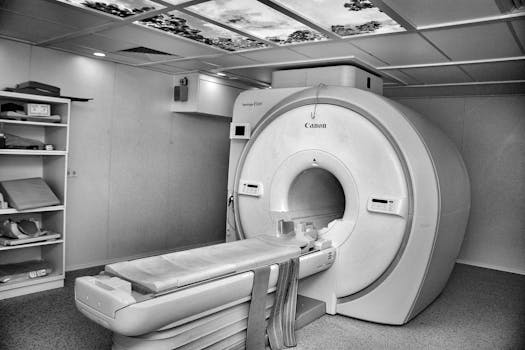
Black and white image of a modern MRI machine in a hospital room with overhead ceiling art. Photo: sirmudi_photography / Pexels
The cost of an MRI scan in California is not a fixed number; it's a dynamic figure influenced by a multitude of factors, making it challenging for patients to predict their exact out-of-pocket expenses. One of the primary determinants is the *type of facility* where the MRI is performed. Hospital-based imaging centers typically have higher overheads and, consequently, charge more than independent outpatient imaging centers. This difference can be substantial, often hundreds or even thousands of dollars for the exact same procedure. For instance, an MRI of the knee might cost $1,500 at an outpatient clinic but jump to $4,000 or more at a major hospital in a metropolitan area like Los Angeles or San Francisco. The specific *body part being imaged* also plays a significant role. A brain MRI, for example, often requires more complex protocols and specialized interpretation than a basic limb MRI, leading to a higher price tag. Similarly, an MRI of the spine might be broken down into cervical, thoracic, or lumbar sections, with each section potentially billed separately or as a combined package, further complicating the pricing structure. Another critical factor is the *use of contrast material*. Many MRI scans require an intravenous injection of a gadolinium-based contrast agent to enhance the visibility of certain tissues or abnormalities. This contrast material and its administration come with an additional cost, which can add several hundred dollars to the total bill. Patients should always clarify whether their quoted price includes contrast if it's medically necessary for their scan. The *geographical location* within California also contributes to cost variations. Major metropolitan areas such as the Bay Area (San Francisco, Oakland, San Jose) and Southern California (Los Angeles, Orange County, San Diego) generally have higher healthcare costs across the board, including MRI scans, compared to more rural or less densely populated regions of the state. This is due to higher operating costs, real estate prices, and demand for services. Finally, the *radiologist's fee* for interpreting the images and the *facility fee* for using the equipment and staff are often billed separately. While some quotes may be all-inclusive, it's crucial to ask for a comprehensive estimate that covers both the technical component (facility) and the professional component (radiologist's interpretation) to avoid surprise bills. Understanding these variables is the first step in navigating the complex landscape of MRI costs in California and making informed decisions about your healthcare. For more information on medical billing, explore resources on understanding your medical bills.

Navigating Insurance Coverage and Out-of-Pocket Expenses

Polish 100 złoty notes with pills and blister packs, illustrating medical costs. Photo: Pixabay / Pexels
Even with health insurance, the cost of an MRI scan in California can still lead to significant out-of-pocket expenses. The extent of your financial responsibility hinges heavily on your specific insurance plan's design, including your deductible, co-payment, and co-insurance. A *deductible* is the amount you must pay for covered healthcare services before your insurance plan starts to pay. If you have a high-deductible health plan (HDHP), you might be responsible for the entire cost of the MRI until your deductible is met, which could be thousands of dollars. For example, if your deductible is $3,000 and your MRI costs $2,000, you will likely pay the full $2,000 out of pocket. Once your deductible is met, *co-insurance* typically kicks in, meaning your plan pays a percentage of the cost, and you pay the remaining percentage. A common co-insurance split is 80/20, where your insurer pays 80%, and you pay 20%. So, if an MRI costs $1,000 after your deductible is met, you would still owe $200. *Co-payments* are fixed amounts you pay for covered services after you've paid your deductible. While less common for major procedures like an MRI, some plans might have a co-pay specifically for imaging services. It's imperative to contact your insurance provider directly before scheduling an MRI. Ask specific questions: Is the MRI medically necessary and covered under your plan? Is pre-authorization required, and if so, has it been obtained? What is your remaining deductible? What will your co-insurance or co-pay be for this specific procedure? Will the facility and the interpreting radiologist be in-network? Choosing an out-of-network provider can dramatically increase your costs, as your insurance may cover a much smaller percentage, or none at all, and you could be subject to balance billing. Many insurance companies have online tools or customer service representatives who can help you estimate your out-of-pocket costs for specific procedures at different facilities. Don't hesitate to utilize these resources. Remember, even if your insurance covers a portion, the initial sticker shock can be considerable, making upfront research essential to avoid financial surprises.

Strategies for Finding Affordable MRI Scans in California

Blurred world map with total number of people infected by coronavirus and statistics of various countries Photo: Anton Uniqueton / Pexels
Given the wide range of prices for MRI scans in California, being a proactive consumer can lead to substantial savings. The most effective strategy is to *shop around and compare prices*. Don't just go to the first facility your doctor recommends. Call multiple imaging centers, including independent outpatient clinics and hospital-affiliated centers, and request a detailed quote for the specific MRI you need. Be sure to specify the body part, whether contrast is required, and whether you are paying cash or using insurance. Many independent imaging centers offer significantly lower prices than hospitals, often due to lower overheads and a focus on volume. They also frequently have specific 'cash pay' or 'self-pay' rates that are deeply discounted compared to their billed insurance rates. These rates can be particularly advantageous for individuals with high-deductible health plans who anticipate paying the full cost themselves, or for those without insurance. When comparing quotes, ensure you're comparing apples to apples. Confirm that the quoted price includes both the technical component (the scan itself) and the professional component (the radiologist's interpretation). Ask if there are any additional fees you should be aware of. Another valuable resource is *online price comparison tools*. Websites like Healthcare Bluebook, FAIR Health Consumer, and New Choice Health allow you to search for average costs of medical procedures, including MRIs, in your specific zip code. While these tools provide estimates, they can give you a good starting point for negotiations. *Negotiating prices* directly with imaging centers is also a viable option, especially if you are paying out-of-pocket. Be polite but firm, explain your financial situation, and ask if they can offer a lower rate or a payment plan. Some facilities are willing to work with patients to make healthcare more accessible. Finally, consider *traveling to a slightly less expensive region* if feasible. While California is generally expensive, there can be price disparities even within the state. A short drive to a neighboring county or a less urbanized area might yield lower prices. Always verify the accreditation of any imaging center you choose; look for accreditations from organizations like the American College of Radiology (ACR) to ensure quality and safety standards. For more ways to save on medical care, check out our guide on reducing healthcare costs.

Common Mistakes to Avoid When Getting an MRI in California

Close-up of a woman's hands managing multiple receipts taken from a black wallet. Photo: www.kaboompics.com / Pexels
Navigating the process of getting an MRI in California can be tricky, and certain missteps can lead to unnecessary stress and financial burdens. Being aware of these common mistakes can help you make more informed decisions. One of the most frequent errors is *failing to verify insurance coverage and pre-authorization before the scan*. Many insurance plans require prior approval for an MRI, and without it, your claim could be denied, leaving you responsible for the entire bill. Always call your insurance provider directly, even if your doctor's office says they've handled it, just to double-check. Get a reference number for your call and the name of the representative. Another significant mistake is *not asking for an all-inclusive price quote*. Some facilities might quote only the technical fee, surprising you later with a separate bill from the radiologist. Always ask for a 'global' or 'all-inclusive' price that covers both the facility and the professional interpretation fees. If contrast is needed, ensure that cost is also included in the quote. *Ignoring independent imaging centers* in favor of hospital-based facilities can also be a costly error. While hospitals offer comprehensive care, their imaging services are often significantly more expensive. Independent centers are typically just as well-equipped and accredited, offering the same quality of imaging at a fraction of the cost. Don't assume that a hospital MRI is inherently 'better' or safer. *Not understanding your financial responsibility* is another pitfall. Before the scan, have a clear understanding of your deductible, co-insurance, and out-of-pocket maximum. Don't be afraid to ask for a detailed estimate of your expected payment, either from your insurance company or the facility's billing department. Finally, *waiting until the last minute* to schedule and research can limit your options. If your MRI isn't an emergency, allow yourself ample time to compare prices, verify insurance, and choose the most cost-effective and convenient option. Rushing into the first available slot might mean missing out on significant savings. Avoid these common pitfalls to ensure a smoother and more affordable MRI experience in California. **Key Takeaways to Avoid Mistakes:** * **Always pre-authorize:** Confirm with your insurer. * **Get all-inclusive quotes:** No hidden fees. * **Explore all facility types:** Independent centers often save money. * **Know your insurance benefits:** Understand deductibles and co-insurance. * **Plan ahead:** Give yourself time to research and compare.

Comparison

FeatureIndependent Outpatient ClinicHospital-Based Imaging CenterCash Pay/Self-Pay
Average Cost (e.g., Knee MRI)$800 - $2,500$2,000 - $6,000+$500 - $2,000 (often negotiated)
Insurance Coverage✓ (often requires pre-auth)✓ (often requires pre-auth)✗ (not applicable, but can be cheaper)
Accreditation (ACR)OftenAlmost alwaysVaries by facility
Wait TimesShorter, more flexiblePotentially longerOften shortest
Payment OptionsInsurance, cash, payment plansInsurance, cash, payment plansUpfront cash, sometimes payment plans
Ease of Price ComparisonHigher transparencyLower transparencyHighest transparency (direct quotes)

What Readers Say

"I was really worried about the cost of an MRI scan in California for my shoulder. After calling several places, I found an outpatient center that offered a cash price almost half of what the hospital quoted. It saved me over $1,000 out-of-pocket."

Sarah J. · San Diego, CA

"My insurance deductible was so high that I knew I'd be paying for my brain MRI myself. By comparing quotes online and calling clinics in different parts of the Bay Area, I found a fantastic deal that made the cost manageable. It took some effort, but it was worth it."

Michael D. · Oakland, CA

"After a sports injury, I needed an urgent knee MRI. I was able to get a same-day appointment at an independent imaging center at a very reasonable self-pay rate. The efficiency and cost savings were a huge relief during a stressful time."

Jessica L. · Sacramento, CA

"The cost of an MRI scan in California is no joke, especially in LA. While my insurance covered most of it, understanding my co-insurance beforehand prevented any billing surprises. Still, it was a significant expense, but the quality of care was excellent."

David K. · Los Angeles, CA

"I needed a follow-up MRI for my back. The difference in price between the hospital and a standalone imaging center was staggering. I chose the independent center, saved a considerable amount, and received the exact same high-quality images and report."

Emily R. · Fresno, CA

Frequently Asked Questions

What is the average cost of an MRI scan in California?

The average cost of an MRI scan in California can vary widely, from as low as $300-$500 for a basic scan at an outpatient facility with a cash discount, up to $4,000-$6,000 or more at a hospital-based imaging center, especially for complex scans or those requiring contrast. Prices are heavily influenced by location, facility type, and body part being imaged.

Does insurance cover MRI scans in California?

Yes, most health insurance plans in California cover medically necessary MRI scans. However, coverage is subject to your plan's deductible, co-payment, and co-insurance. Many plans also require pre-authorization from your insurance company before the scan to ensure coverage.

How can I find the cheapest MRI in California?

To find the cheapest MRI, compare prices from multiple independent outpatient imaging centers in your area, ask for cash or self-pay rates, and inquire if they offer discounts. Utilize online price comparison tools and consider facilities slightly outside major metropolitan areas if feasible. Always ensure the facility is accredited.

Is a cash pay MRI cheaper than using insurance?

Often, yes. Many imaging centers offer significantly discounted rates for patients who pay cash or self-pay upfront, as it reduces the administrative burden and billing complexities associated with insurance claims. This can be particularly beneficial for those with high deductibles or limited insurance coverage.

What's the difference in cost between a hospital MRI and an outpatient MRI?

Hospital-based MRI scans are typically much more expensive than those performed at independent outpatient imaging centers. Hospitals have higher operating costs and often include facility fees that drive up the price. Outpatient centers specialize in imaging, have lower overheads, and can pass those savings on to patients.

Who interprets my MRI results and is their fee included in the cost?

Your MRI results are interpreted by a board-certified radiologist. Their professional fee for reading and reporting on the images may or may not be included in the initial quote from the imaging facility. Always ask for an 'all-inclusive' or 'global' price that covers both the technical component (scan) and the professional component (radiologist's interpretation) to avoid separate billing.

Are there financing options for MRI costs in California?

Yes, many imaging centers and hospitals offer payment plans or work with third-party medical financing companies (like CareCredit) to help patients manage the cost of an MRI. It's always worth discussing your financial situation with the billing department to explore available options before your scan.

How does the use of contrast material affect MRI cost?

If your MRI requires intravenous contrast material, it will add to the overall cost. The contrast agent itself and its administration are additional charges, which can increase the total bill by several hundred dollars. Ensure that any quoted price specifies whether it includes contrast if it's necessary for your particular scan.

Don't let uncertainty about the cost of an MRI scan in California delay your essential healthcare. Empower yourself with knowledge, compare prices, and advocate for your financial well-being. Take control of your health journey today.

Topics: cost of MRI scan in CaliforniaMRI pricing Californiaaffordable MRI CAMRI insurance coverage Californiamagnetic resonance imaging cost
Leo List
Brampton weed
Adultwork